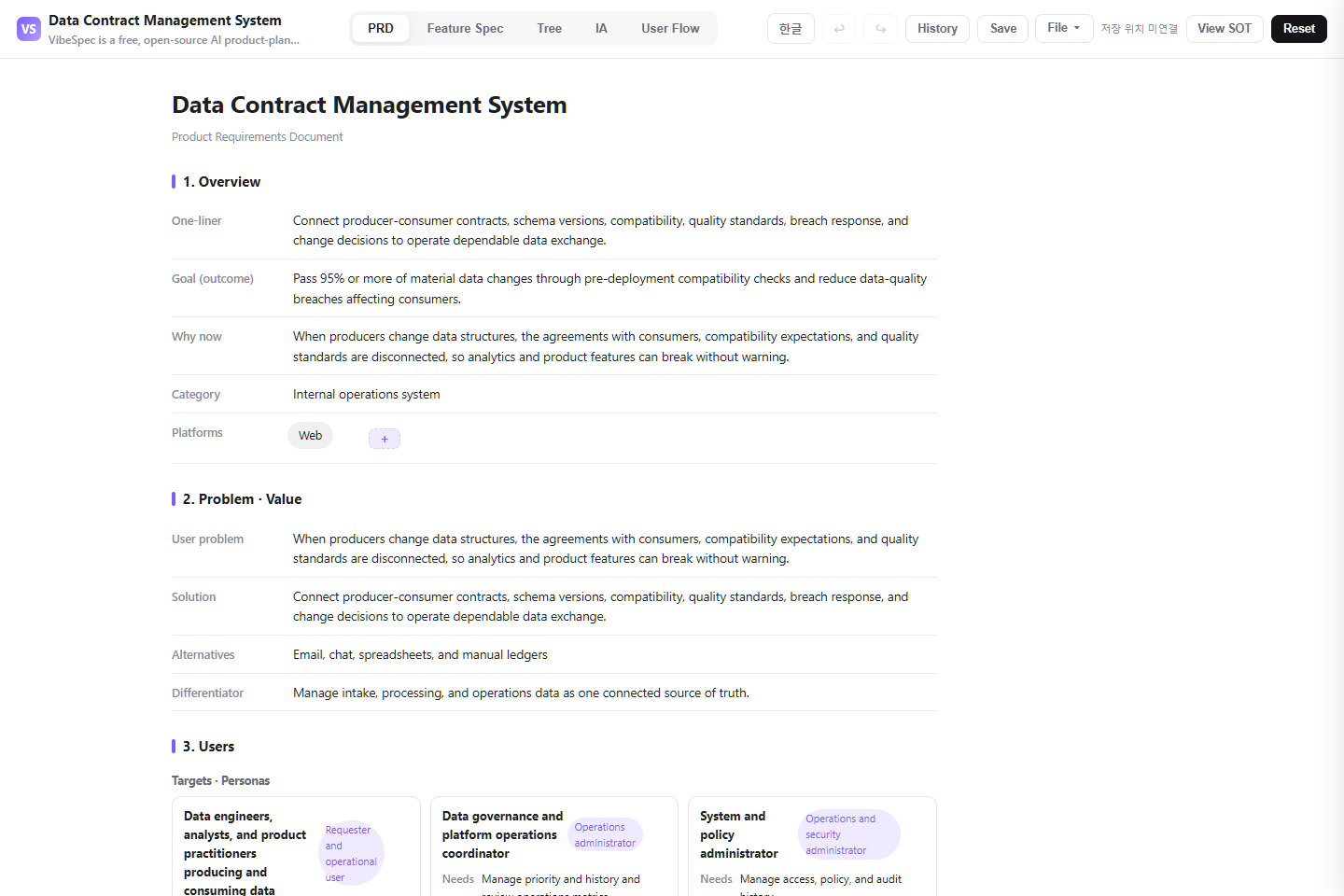
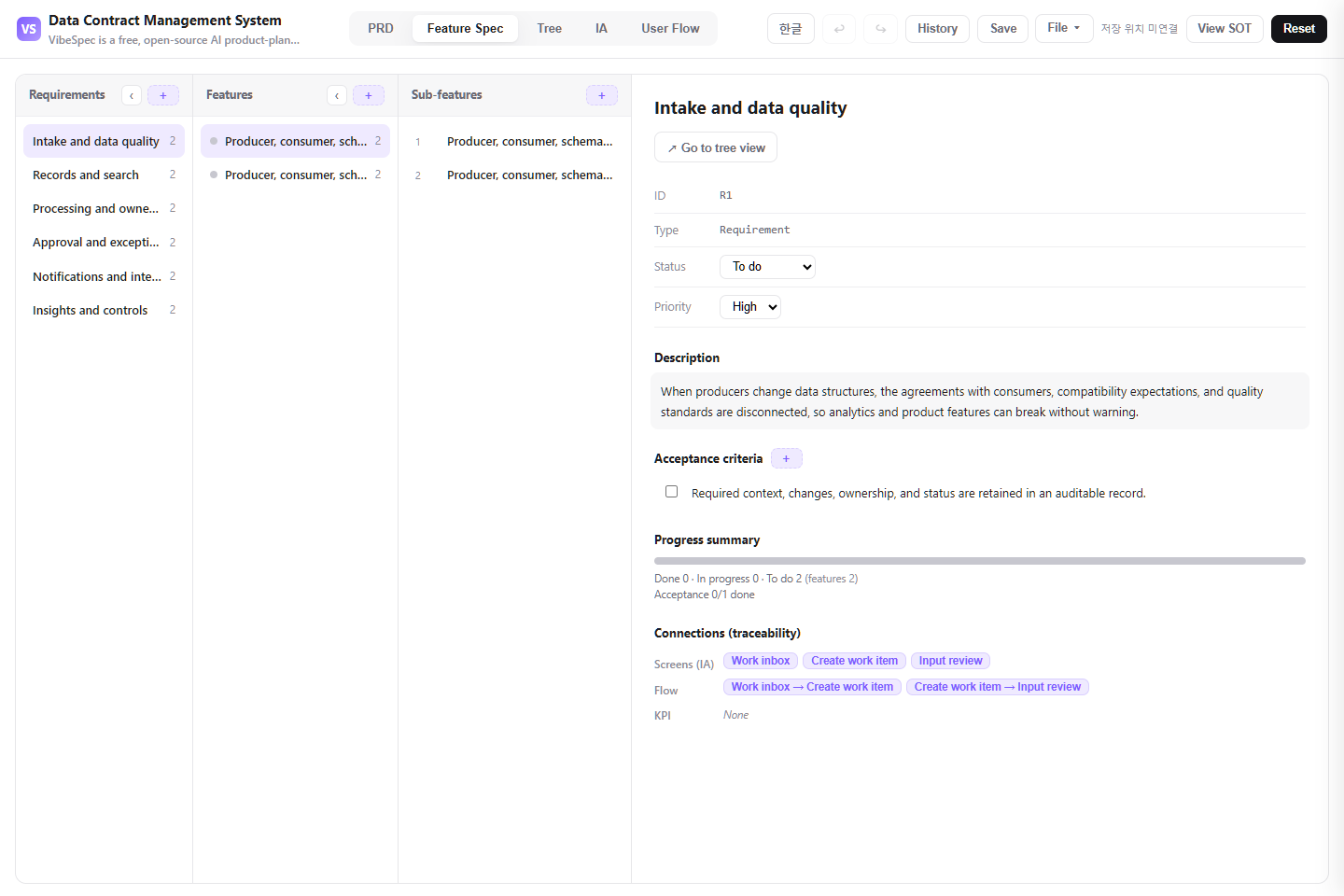
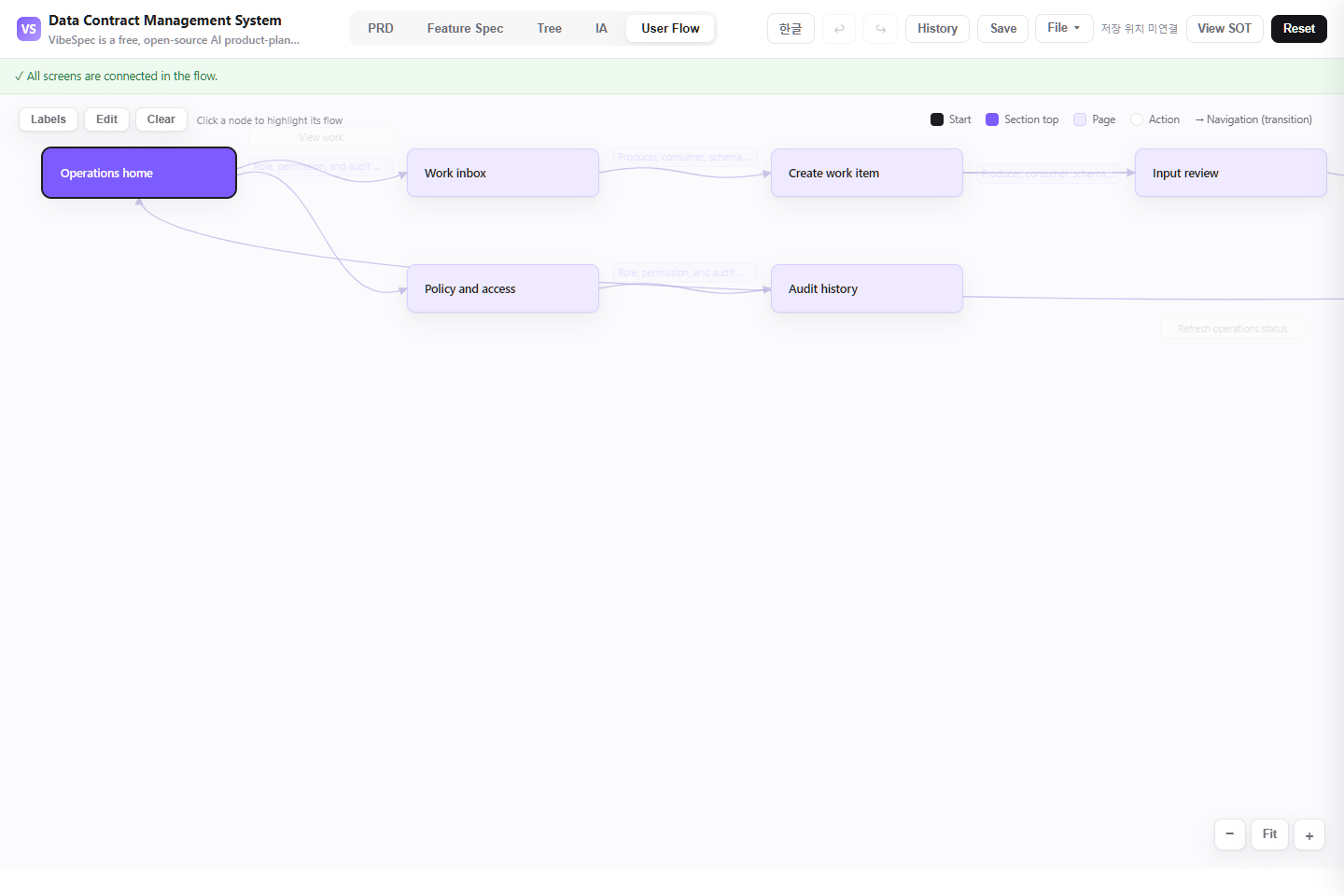
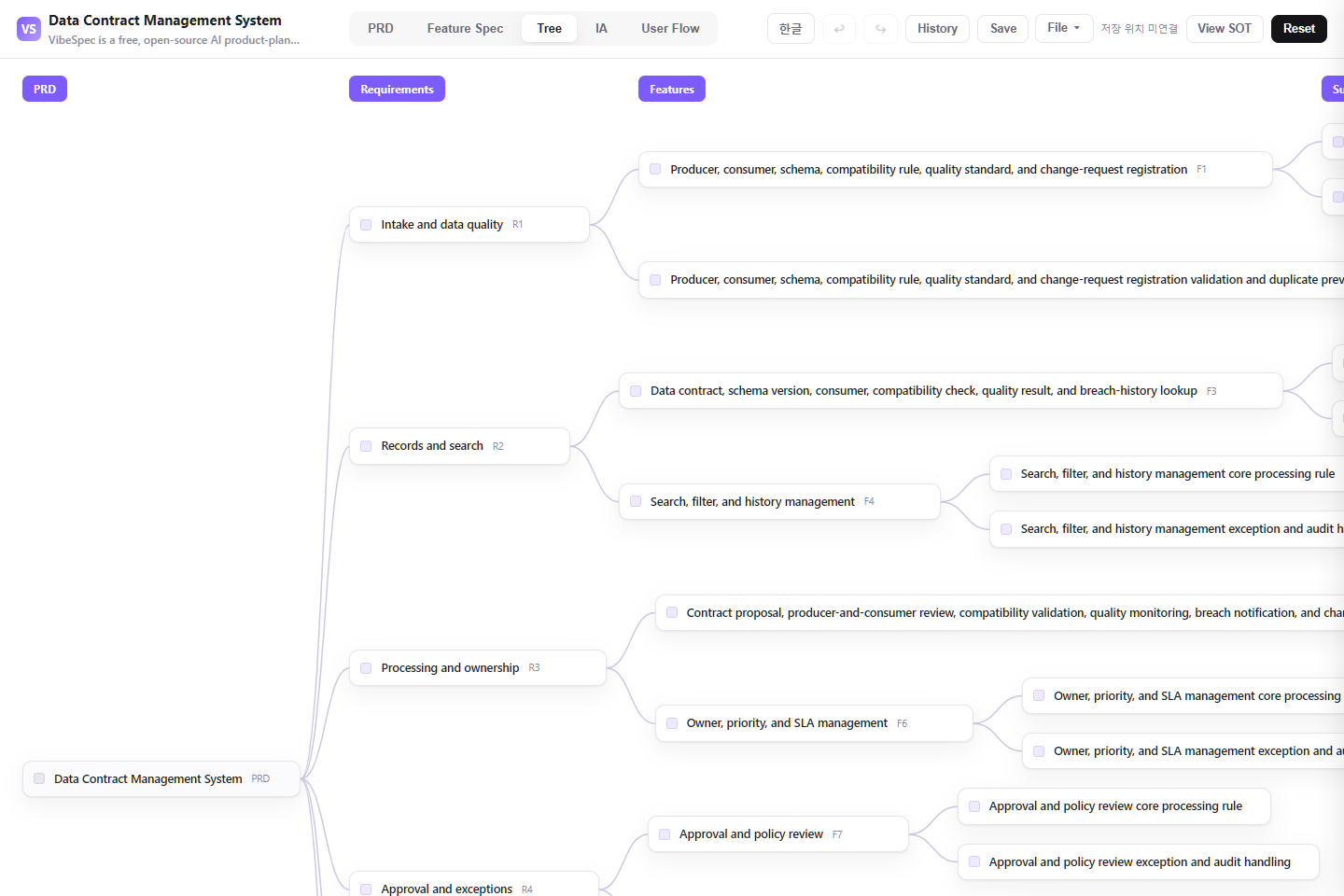
A SOT-based PRD template for planning data contract operations, covering producers and consumers, schema versions, compatibility checks, quality standards, breach response, impact review, and approval or rollback decisions.
Teams planning data contract operations for data engineers, analysts, and product practitioners who produce or consume data, plus data governance and platform teams.
CONTENTS
What the template includes
Producer, consumer, schema, compatibility rule, quality standard, and change-request registration
Data contract, schema version, consumer, compatibility check, quality result, and breach-history lookup
How to use and adapt this Data Contract Management System
This plan gives data producers, consumers, and platform or governance operators one contract record for schema versions, compatibility checks, quality results, affected consumers, and breach history. Producers and consumers review a change together; operators approve, roll back, or time-box an exception from recorded evidence. Review responsibilities and decision paths in the HTML, then adapt the SOT JSON to your data policy with VibeSpec in Claude or Codex.
What this Data Contract Management System actually includes
Producer, consumer, schema, compatibility rule, quality standard, and change-request registration
For producer, consumer, schema, compatibility rule, quality standard, and change-request registration, define the required context, classification rules, and duplicate or missing-data checks before work enters the operating queue.
Data contract, schema version, consumer, compatibility check, quality result, and breach-history lookup
For data contract, schema version, consumer, compatibility check, quality result, and breach-history lookup, keep status, owner, priority, and change history together so the team can find the complete operating context.
In contract proposal, producer-and-consumer review, compatibility validation, quality monitoring, breach notification, and change approval-or-rollback handling, connect assignment, approval or rejection, exception handling, and completion confirmation as one accountable workflow.
Contract adoption, compatibility failure, quality breach, affected consumer, change lead time, and breach-resolution reporting
Use contract adoption, compatibility failure, quality breach, affected consumer, change lead time, and breach-resolution reporting to track due dates, bottlenecks, exceptions, and completion outcomes by team, period, and operating category.
Policy, access, and integration foundations
Set the role-based access, audit history, notifications, and external-system boundaries that Data Contract Management System needs to operate safely.
Start in three steps, even without planning experience
1. Review the complete HTML with your team
The download opens in a browser without setup. Compare the PRD, feature specification, screen structure, and user flow with the work your team does today.
2. Name your operating rules
Write down real user roles, required data, approval rules, exceptions, and success metrics. Start with the core flow from producer, consumer, schema, compatibility rule, quality standard, and change-request registration through contract proposal, producer-and-consumer review, compatibility validation, quality monitoring, breach notification, and change approval-or-rollback handling.
3. Give the SOT JSON to VibeSpec
Attach the SOT JSON in Claude or Codex with the VibeSpec plugin and describe the change in plain language. VibeSpec keeps requirements, features, screens, and user flows connected.
Adapt this Data Contract Management System for your team
Rename terms and states first
Replace the template vocabulary, states, and classification with the terms your team uses. Keep producer, consumer, schema, compatibility rule, quality standard, and change-request registration and data contract, schema version, consumer, compatibility check, quality result, and breach-history lookup consistent.
Make roles, approvals, and exceptions explicit
Define who registers, reviews, approves, processes, and confirms completion, plus the conditions that trigger rejection or reprocessing in contract proposal, producer-and-consumer review, compatibility validation, quality monitoring, breach notification, and change approval-or-rollback handling.
Keep screens, metrics, and integrations connected
Decide what contract adoption, compatibility failure, quality breach, affected consumer, change lead time, and breach-resolution reporting should measure, then connect any SSO, messaging, or adjacent-system integration to the related screens and user flow.
Capabilities to add next
Schema registry and CI gates
Run compatibility checks from the schema registry and deployment pipeline, then return failure causes, exception approvals, and revalidation results to the governed contract change.
Lineage and catalog impact analysis
Use catalog and lineage records to find actual consumers, dashboards, models, and product features, then attach reviewers and notification recipients to each contract change.
Breach response and SLOs
Define breach severity, notice deadlines, temporary-exception expiry, recovery evidence, repeat-breach follow-up, and resolution SLO reporting by contract.
Prompts you can use with VibeSpec
Adapt it to our terminology and roles
Adapt this Data Contract Management System for our team. Ask about our user roles, states, required fields, and approval steps first, then update the requirements, screens, and user flows together.
Simplify it into an MVP
Reduce this Data Contract Management System to an MVP that keeps producer, consumer, schema, compatibility rule, quality standard, and change-request registration, data contract, schema version, consumer, compatibility check, quality result, and breach-history lookup, and contract proposal, producer-and-consumer review, compatibility validation, quality monitoring, breach notification, and change approval-or-rollback handling. Move automation and external integrations into separate initiatives.
Resolve a KPI Measurement Check decision
Use KPI Measurement Check as a measurement-readiness review for contract adoption on material data changes. Identify unresolved definitions for material change, numerator and denominator, check-result source, and affected-consumer determination. Ask producer and consumer owners for decisions, then create a scoped change plan limited to affected requirements, feature specs, screens, user flows, and measurement events.
Data Contract Management System FAQ
Can I use this template without development experience?
Yes. The complete HTML opens in a browser for review and sharing. To adapt the plan, attach the SOT JSON to Claude or Codex with the VibeSpec plugin and describe the change in plain language.
What is included in this planning template?
It includes producer, consumer, schema, compatibility rule, quality standard, and change-request registration, data contract, schema version, consumer, compatibility check, quality result, and breach-history lookup, contract proposal, producer-and-consumer review, compatibility validation, quality monitoring, breach notification, and change approval-or-rollback handling, and contract adoption, compatibility failure, quality breach, affected consumer, change lead time, and breach-resolution reporting, plus foundations for access, audit history, notifications, and integrations.
What is the difference between the HTML and SOT JSON downloads?
The HTML is a complete planning document for reading and sharing. The SOT JSON is source data that VibeSpec can update while keeping requirements, features, screens, and user flows connected.
Does KPI Measurement Check automatically guarantee data quality?
No. KPI Measurement Check is a measurement-readiness review for whether contract adoption or breach-resolution KPIs have defined functions and data. It does not automatically guarantee data accuracy or every consumer outcome.
WORKFLOW
Use it with VibeSpec
Open the complete HTML file to review or share it immediately.
Download the SOT JSON and load it in the VibeSpec viewer.
Adapt the features, screens, and flows for your team.