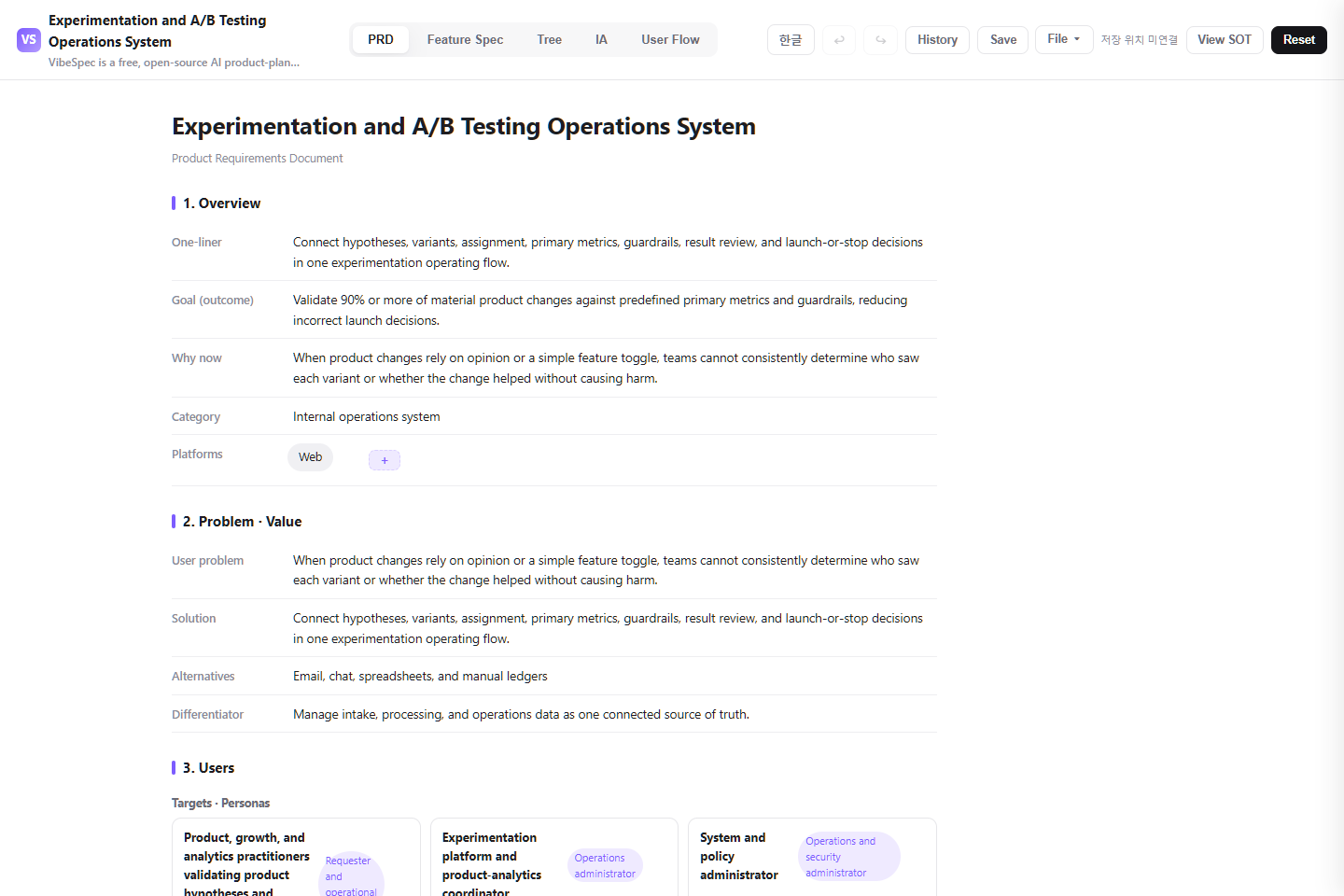
Teams planning an experimentation platform for product, growth, and analytics practitioners who validate product hypotheses, plus platform operators responsible for reliable assignment and measurement.
CONTENTS
What the template includes
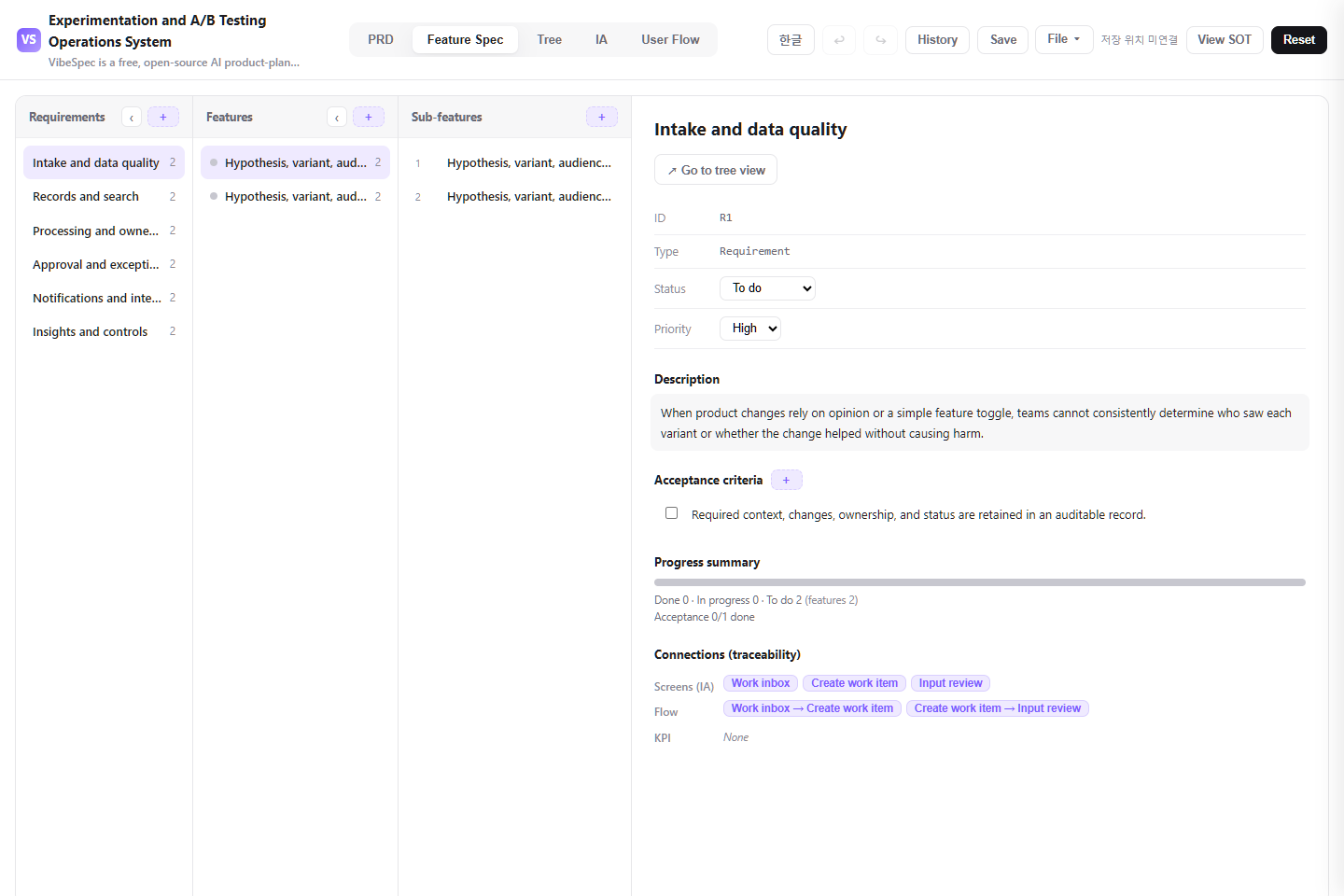
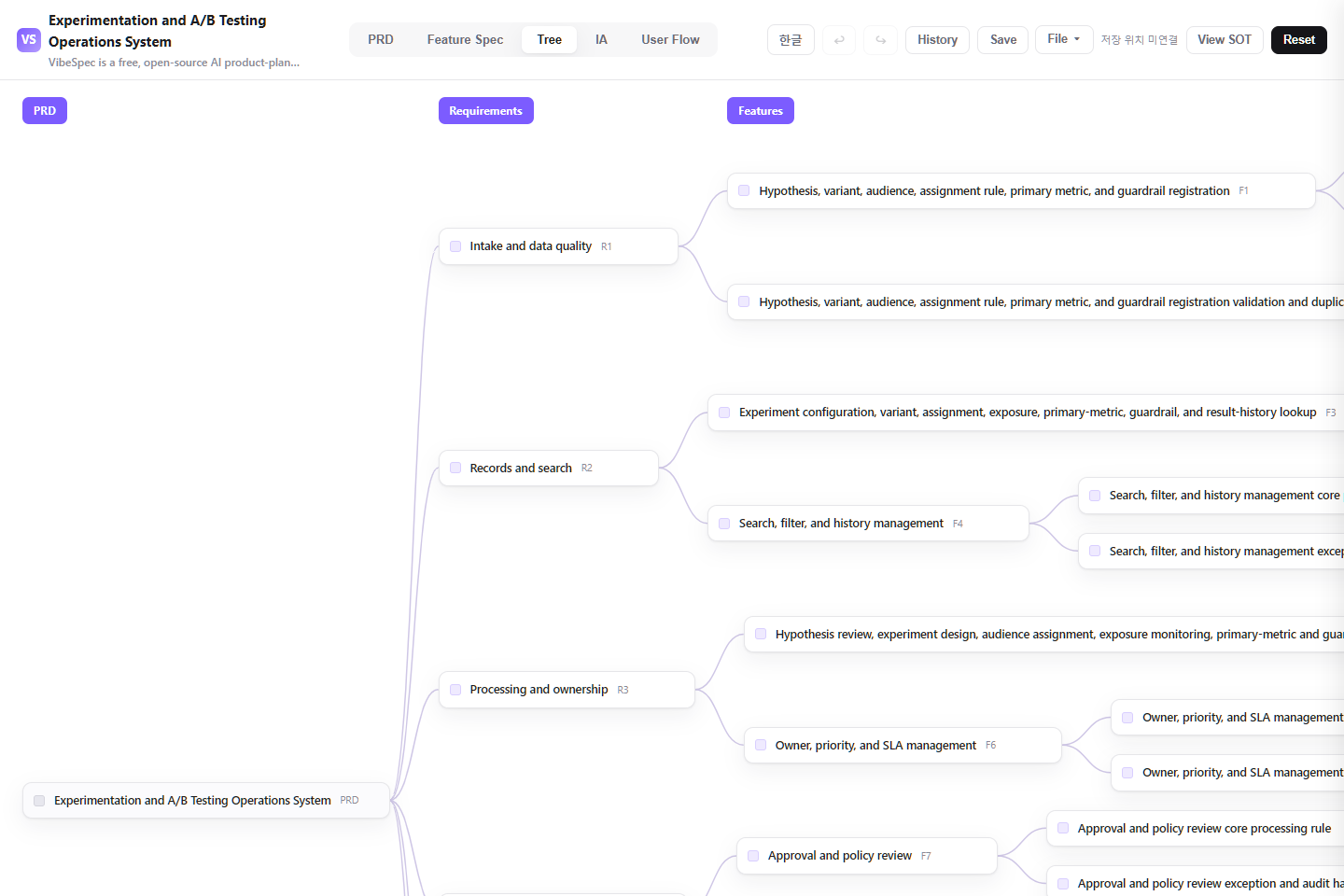
Hypothesis, variant, audience, assignment rule, primary metric, and guardrail registration
Experiment configuration, variant, assignment, exposure, primary-metric, guardrail, and result-history lookup
Hypothesis review, experiment design, audience assignment, exposure monitoring, primary-metric and guardrail decisioning, and launch-or-stop handling
How to use and adapt this Experimentation and A/B Testing Operations System
This plan lets product, growth, and analytics teams evaluate a hypothesis with one connected record for experiments, variants, audiences, assignments, exposures, primary metrics, and guardrails. Platform operators investigate sample-ratio mismatch and delayed data; product owners use the reviewed evidence to launch, stop, or run a follow-up experiment. Review the HTML operating flow, then adapt the SOT JSON to your experimentation policy with VibeSpec in Claude or Codex.
What this Experimentation and A/B Testing Operations System actually includes
Hypothesis, variant, audience, assignment rule, primary metric, and guardrail registration
For hypothesis, variant, audience, assignment rule, primary metric, and guardrail registration, define the required context, classification rules, and duplicate or missing-data checks before work enters the operating queue.
Experiment configuration, variant, assignment, exposure, primary-metric, guardrail, and result-history lookup
For experiment configuration, variant, assignment, exposure, primary-metric, guardrail, and result-history lookup, keep status, owner, priority, and change history together so the team can find the complete operating context.
Hypothesis review, experiment design, audience assignment, exposure monitoring, primary-metric and guardrail decisioning, and launch-or-stop handling
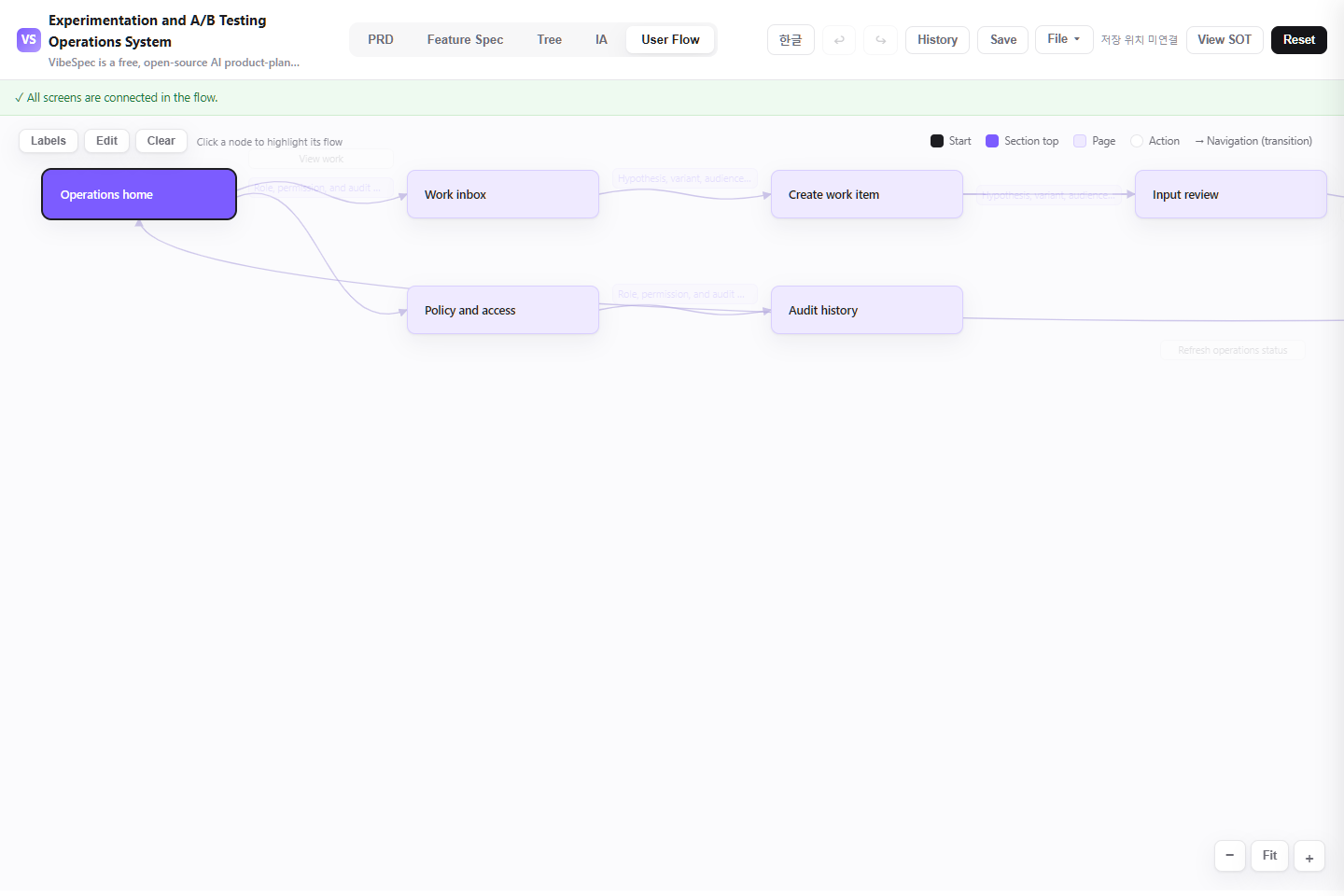
In hypothesis review, experiment design, audience assignment, exposure monitoring, primary-metric and guardrail decisioning, and launch-or-stop handling, connect assignment, approval or rejection, exception handling, and completion confirmation as one accountable workflow.
Use experiment volume, assignment coverage, conversion impact, statistical confidence, guardrail breach, and decision reporting to track due dates, bottlenecks, exceptions, and completion outcomes by team, period, and operating category.
Policy, access, and integration foundations
Set the role-based access, audit history, notifications, and external-system boundaries that Experimentation and A/B Testing Operations System needs to operate safely.
Start in three steps, even without planning experience
1. Review the complete HTML with your team
The download opens in a browser without setup. Compare the PRD, feature specification, screen structure, and user flow with the work your team does today.
2. Name your operating rules
Write down real user roles, required data, approval rules, exceptions, and success metrics. Start with the core flow from hypothesis, variant, audience, assignment rule, primary metric, and guardrail registration through hypothesis review, experiment design, audience assignment, exposure monitoring, primary-metric and guardrail decisioning, and launch-or-stop handling.
3. Give the SOT JSON to VibeSpec
Attach the SOT JSON in Claude or Codex with the VibeSpec plugin and describe the change in plain language. VibeSpec keeps requirements, features, screens, and user flows connected.
Adapt this Experimentation and A/B Testing Operations System for your team
Rename terms and states first
Replace the template vocabulary, states, and classification with the terms your team uses. Keep hypothesis, variant, audience, assignment rule, primary metric, and guardrail registration and experiment configuration, variant, assignment, exposure, primary-metric, guardrail, and result-history lookup consistent.
Make roles, approvals, and exceptions explicit
Define who registers, reviews, approves, processes, and confirms completion, plus the conditions that trigger rejection or reprocessing in hypothesis review, experiment design, audience assignment, exposure monitoring, primary-metric and guardrail decisioning, and launch-or-stop handling.
Keep screens, metrics, and integrations connected
Decide what experiment volume, assignment coverage, conversion impact, statistical confidence, guardrail breach, and decision reporting should measure, then connect any SSO, messaging, or adjacent-system integration to the related screens and user flow.
Capabilities to add next
Assignment and exposure SDK
Add stable user assignment, mutual-exclusion groups, exposure retries, kill switches, and feature-flag handoffs as a separately scoped SDK integration.
Event and metric pipelines
Connect primary-metric and guardrail definitions to analytics events and the warehouse, including rules for delay, duplication, loss, and schema changes before decisioning.
Sequential testing and portfolio controls
Extend the plan with early-stopping rules, multiple-testing correction, experiment collisions, long-term holdouts, and portfolio-level learning and follow-up decisions.
Prompts you can use with VibeSpec
Adapt it to our terminology and roles
Adapt this Experimentation and A/B Testing Operations System for our team. Ask about our user roles, states, required fields, and approval steps first, then update the requirements, screens, and user flows together.
Simplify it into an MVP
Reduce this Experimentation and A/B Testing Operations System to an MVP that keeps hypothesis, variant, audience, assignment rule, primary metric, and guardrail registration, experiment configuration, variant, assignment, exposure, primary-metric, guardrail, and result-history lookup, and hypothesis review, experiment design, audience assignment, exposure monitoring, primary-metric and guardrail decisioning, and launch-or-stop handling. Move automation and external integrations into separate initiatives.
Resolve a KPI Measurement Check decision
Use KPI Measurement Check as a measurement-readiness review for the experiment primary metric. Identify unresolved exposure denominator, decision window, sample-ratio-mismatch exclusion, and guardrail precedence. After asking the experiment owner for those decisions, write a scoped change plan limited to affected requirements, feature specs, screens, user flows, and event definitions.
Experimentation and A/B Testing Operations System FAQ
Can I use this template without development experience?
Yes. The complete HTML opens in a browser for review and sharing. To adapt the plan, attach the SOT JSON to Claude or Codex with the VibeSpec plugin and describe the change in plain language.
What is included in this planning template?
It includes hypothesis, variant, audience, assignment rule, primary metric, and guardrail registration, experiment configuration, variant, assignment, exposure, primary-metric, guardrail, and result-history lookup, hypothesis review, experiment design, audience assignment, exposure monitoring, primary-metric and guardrail decisioning, and launch-or-stop handling, and experiment volume, assignment coverage, conversion impact, statistical confidence, guardrail breach, and decision reporting, plus foundations for access, audit history, notifications, and integrations.
What is the difference between the HTML and SOT JSON downloads?
The HTML is a complete planning document for reading and sharing. The SOT JSON is source data that VibeSpec can update while keeping requirements, features, screens, and user flows connected.
Does KPI Measurement Check automatically decide the winning variant?
No. KPI Measurement Check is a measurement-readiness review for whether primary metrics and guardrails have usable functions, events, and rules. It does not replace statistical analysis or the launch decision.
WORKFLOW
Use it with VibeSpec
Open the complete HTML file to review or share it immediately.
Download the SOT JSON and load it in the VibeSpec viewer.
Adapt the features, screens, and flows for your team.