1. Define the sharing boundary
Decide whether announcements and documents are visible to the company, a department, or a project. Distinguish permission to publish from permission to read.
FREE CLAUDE & CODEX PLUGIN TEMPLATE
A real SOT-based Groupware and Collaboration System PRD template connecting organization, user, board, calendar, and collaboration-space registration, notice, document, calendar, task, participation, and read-history lookup, publishing, sharing, commenting, task assignment, notification, approval, and retention handling, notice reach, collaboration participation, task completion, response, and adoption reporting.
Guide updated:
View source on GitHub · MIT licensed
USE CASE
Teams designing an internal operations system for employee and team leader handling internal notices, schedules, and collaboration work and groupware and workplace-transformation coordinator
CONTENTS
VIBESPEC VIEWER
Each screen is generated from the public SOT included with this template.
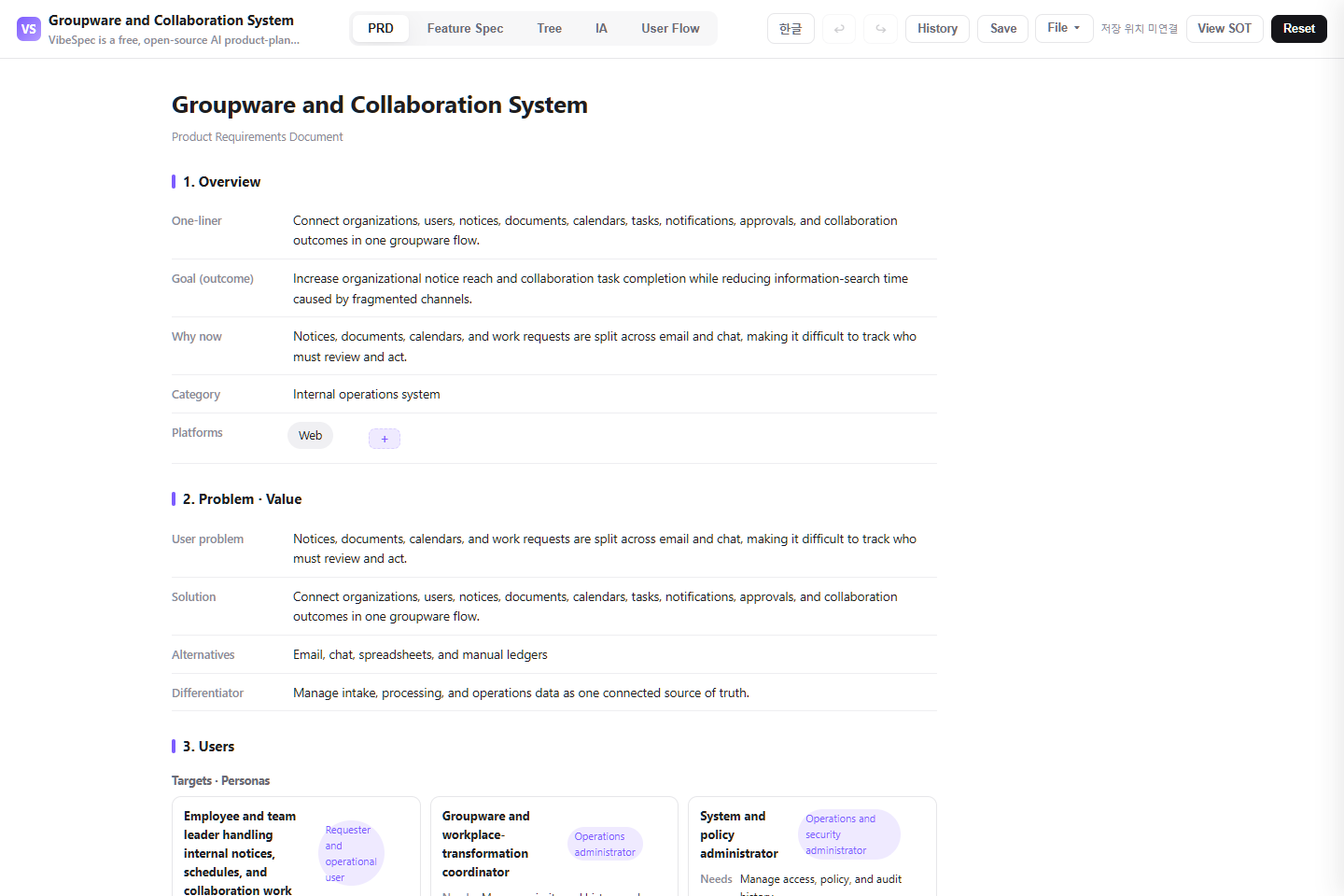 Open this screen in the live demo
 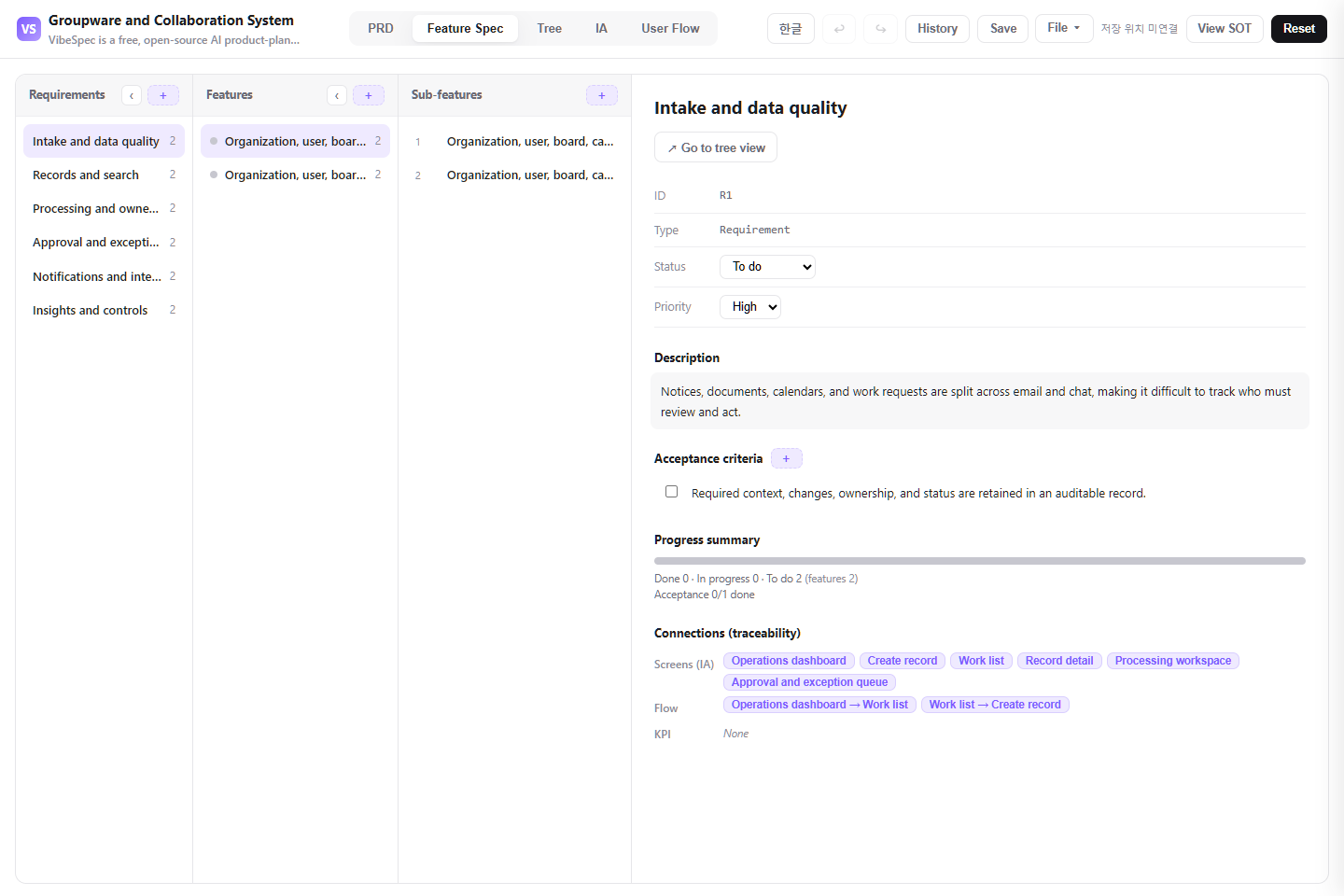 Open this screen in the live demo
 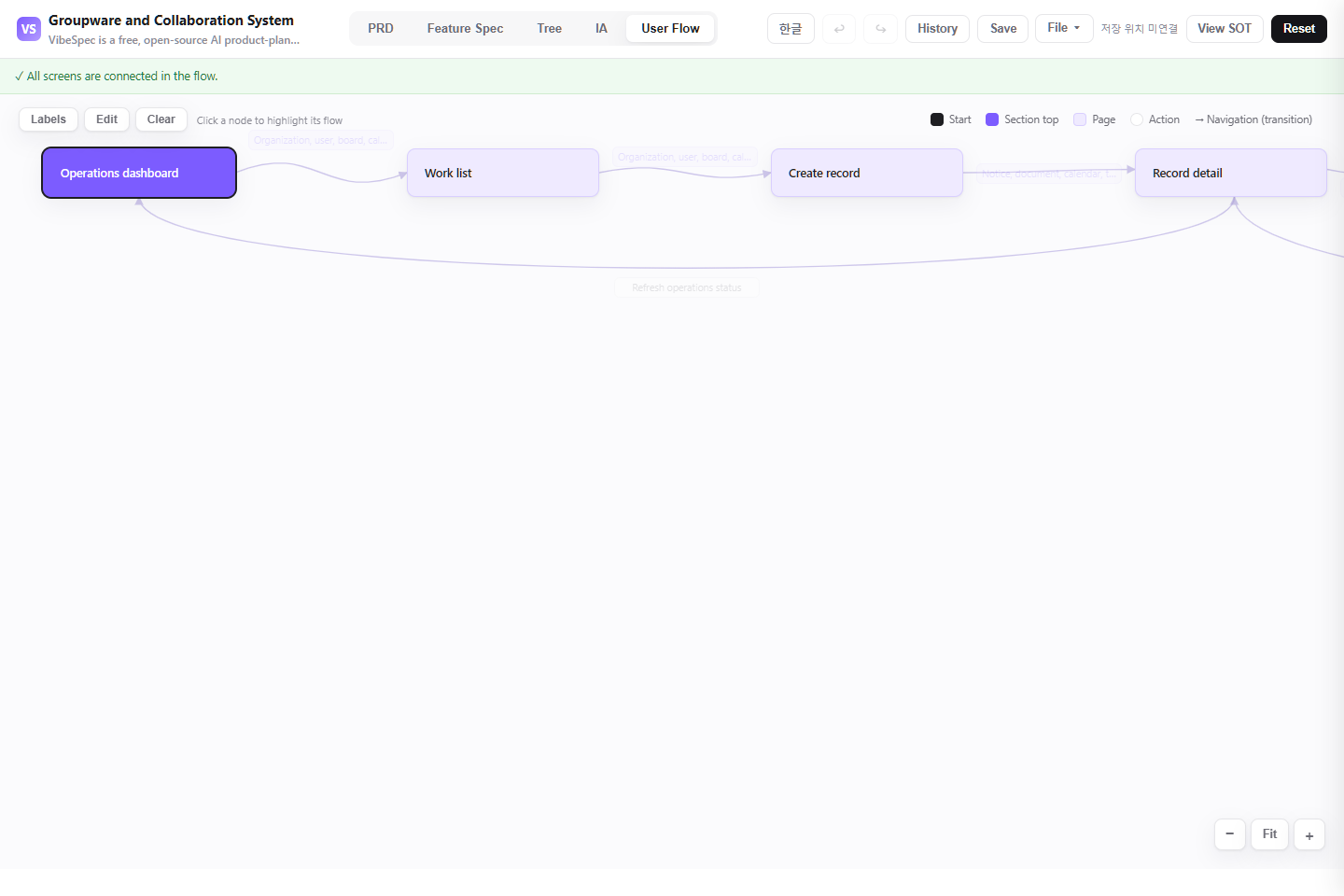 Open this screen in the live demo
 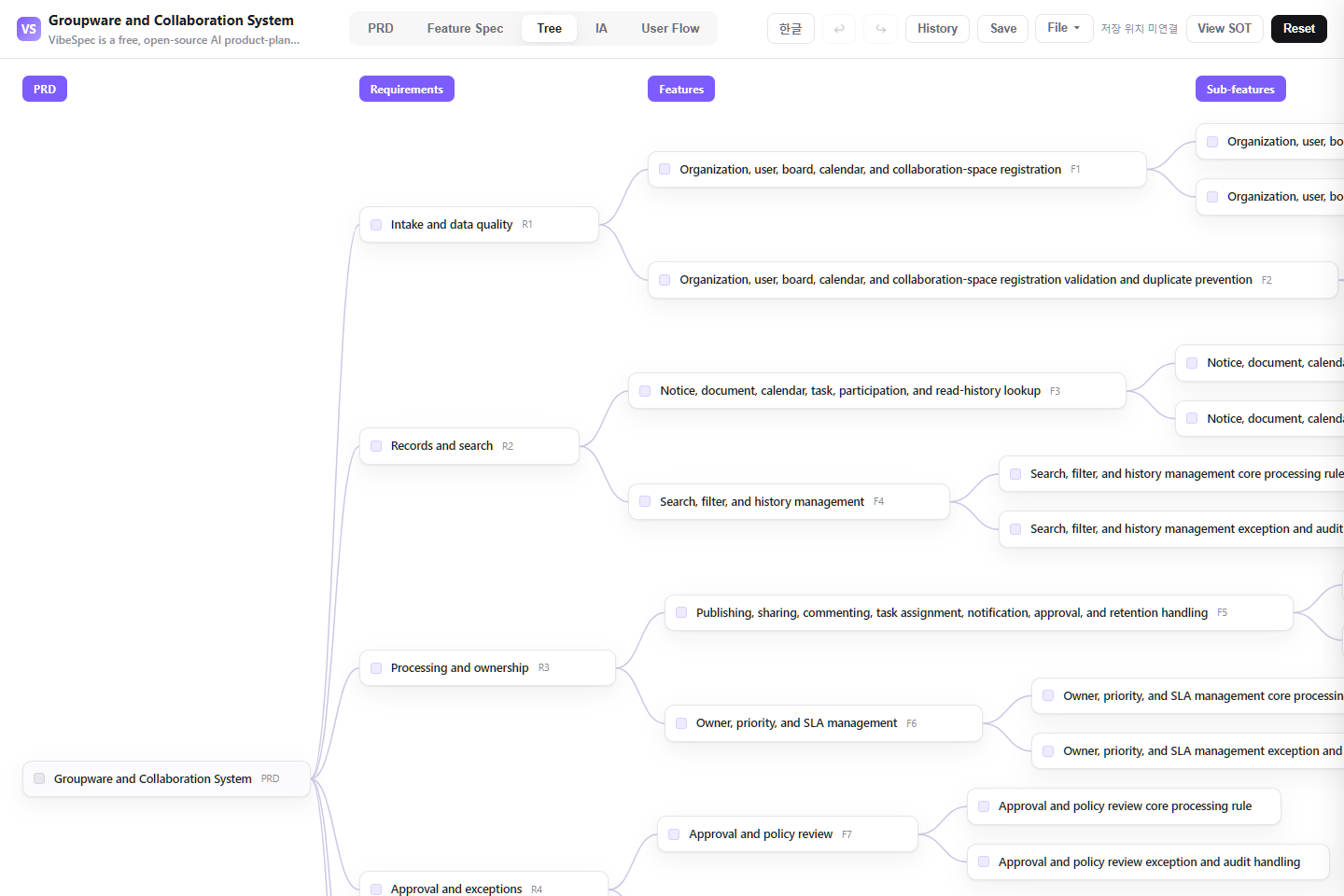 Open this screen in the live demo
 PRACTICAL GUIDE
This Groupware and Collaboration System connects organization, user, board, calendar, and collaboration-space registration, notice, document, calendar, task, participation, and read-history lookup, publishing, sharing, commenting, task assignment, notification, approval, and retention handling, and notice reach, collaboration participation, task completion, response, and adoption reporting in one SOT-based planning document. Use the complete HTML to review and share the plan, then adapt the SOT JSON with the VibeSpec plugin in Claude or Codex.
Use this proposed review exercise to add your organization's rules. It does not mean the template automatically processes employee transfers.
Decide whether announcements and documents are visible to the company, a department, or a project. Distinguish permission to publish from permission to read.
When an employee changes departments, decide who takes over unfinished work and what access the employee retains to previous documents. Review ownership and access together.
Specify the history to retain when permissions or owners change and where operators review it. Ask VibeSpec to add the agreed acceptance criteria to the SOT, then review the result.
For organization, user, board, calendar, and collaboration-space registration, define the required context, classification rules, and duplicate or missing-data checks before work enters the operating queue.
For notice, document, calendar, task, participation, and read-history lookup, keep status, owner, priority, and change history together so the team can find the complete operating context.
In publishing, sharing, commenting, task assignment, notification, approval, and retention handling, connect assignment, approval or rejection, exception handling, and completion confirmation as one accountable workflow.
Use notice reach, collaboration participation, task completion, response, and adoption reporting to track due dates, bottlenecks, exceptions, and completion outcomes by team, period, and operating category.
Set the role-based access, audit history, notifications, and external-system boundaries that Groupware and Collaboration System needs to operate safely.
The download opens in a browser without setup. Compare the PRD, feature specification, screen structure, and user flow with the work your team does today.
Write down real user roles, required data, approval rules, exceptions, and success metrics. Start with the core flow from organization, user, board, calendar, and collaboration-space registration through publishing, sharing, commenting, task assignment, notification, approval, and retention handling.
Attach the SOT JSON in Claude or Codex with the VibeSpec plugin and describe the change in plain language. VibeSpec keeps requirements, features, screens, and user flows connected.
Replace the template vocabulary, states, and classification with the terms your team uses. Keep organization, user, board, calendar, and collaboration-space registration and notice, document, calendar, task, participation, and read-history lookup consistent.
Define who registers, reviews, approves, processes, and confirms completion, plus the conditions that trigger rejection or reprocessing in publishing, sharing, commenting, task assignment, notification, approval, and retention handling.
Decide what notice reach, collaboration participation, task completion, response, and adoption reporting should measure, then connect any SSO, messaging, or adjacent-system integration to the related screens and user flow.
Create a separate Groupware and Collaboration System initiative for due-date alerts, owner assignment, approval reminders, and exception follow-up.
Before connecting Groupware and Collaboration System to source data or adjacent systems, define synchronization cadence, failure handling, access boundaries, and audit records.
Extend Groupware and Collaboration System with team, period, and category analysis plus action rules for deteriorating completion or service levels.
Adapt this Groupware and Collaboration System for our team. Ask about our user roles, states, required fields, and approval steps first, then update the requirements, screens, and user flows together.Reduce this Groupware and Collaboration System to an MVP that keeps organization, user, board, calendar, and collaboration-space registration, notice, document, calendar, task, participation, and read-history lookup, and publishing, sharing, commenting, task assignment, notification, approval, and retention handling. Move automation and external integrations into separate initiatives.Create a separate initiative on top of this Groupware and Collaboration System for due-date alerts and automatic owner assignment. Keep the connection to the existing screens and user flow.Yes. The complete HTML opens in a browser for review and sharing. To adapt the plan, attach the SOT JSON to Claude or Codex with the VibeSpec plugin and describe the change in plain language.
It includes organization, user, board, calendar, and collaboration-space registration, notice, document, calendar, task, participation, and read-history lookup, publishing, sharing, commenting, task assignment, notification, approval, and retention handling, and notice reach, collaboration participation, task completion, response, and adoption reporting, plus foundations for access, audit history, notifications, and integrations.
The HTML is a complete planning document for reading and sharing. The SOT JSON is source data that VibeSpec can update while keeping requirements, features, screens, and user flows connected.
For a discrete capability such as automation, integration, or additional analytics, create and review a separate initiative before changing the product plan broadly.
WORKFLOW