1. Record evidence without claiming the cause
Link the timeout incidents and the affected checkout component to a debt proposal. Separate observed latency from the hypothesis that a shared dependency needs refactoring.
FREE CLAUDE & CODEX PLUGIN TEMPLATE
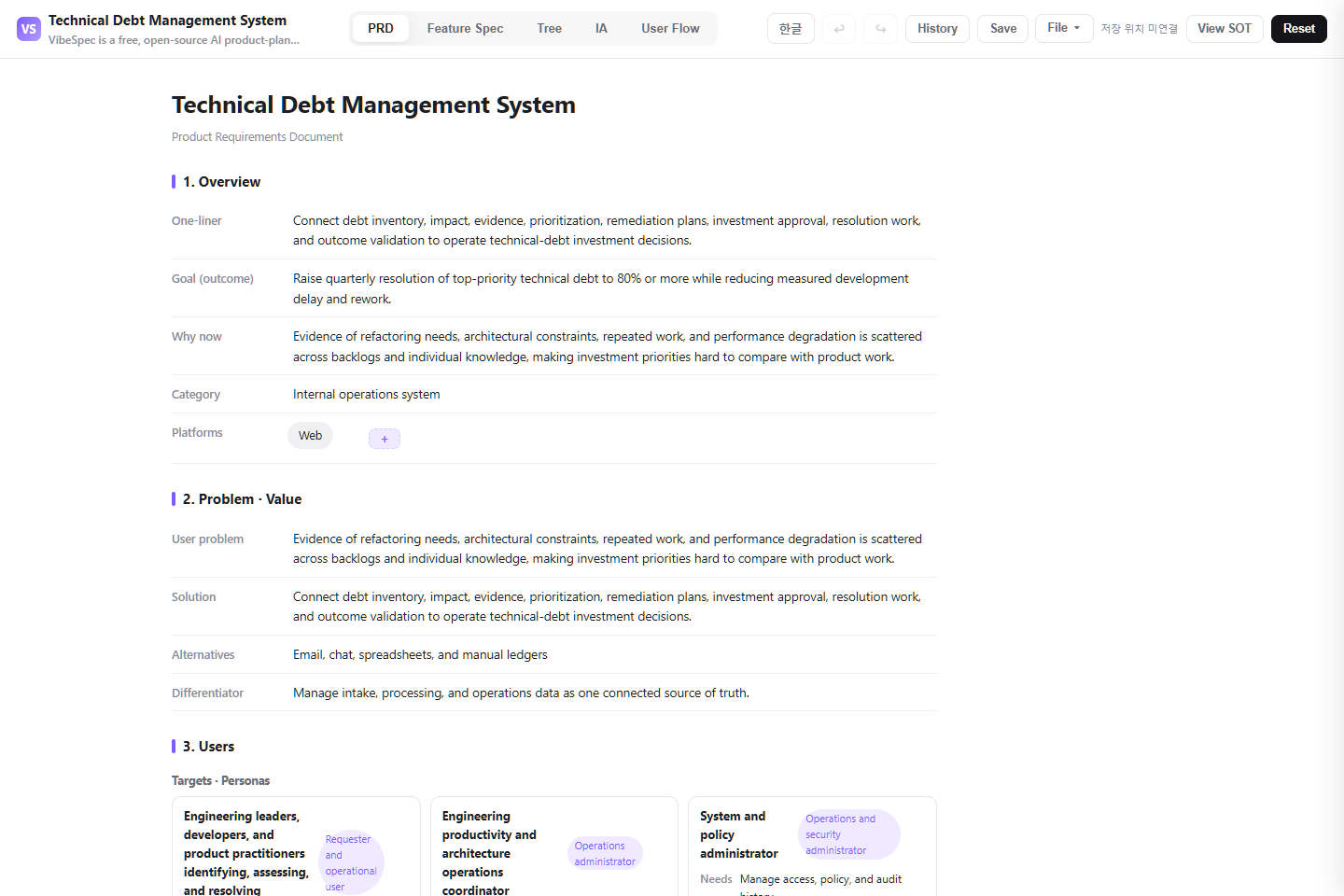
Plan how your team records technical debt, compares impact and effort, approves remediation, and reviews results. This free PRD provides a technical-debt register and workflow as an editable planning source.
Guide updated:
View source on GitHub · MIT licensed
USE CASE
Teams planning a technical debt management system for engineering leaders, developers, product partners, and engineering productivity or architecture teams.
CONTENTS
VIBESPEC VIEWER
Each screen is generated from the public SOT included with this template.
 Open this screen in the live demo
  Open this screen in the live demo
  Open this screen in the live demo
  Open this screen in the live demo
 PRACTICAL GUIDE
This plan lets engineering leaders, developers, product partners, and architecture operators compare technical-debt investments through one inventory of impact, evidence, risk, estimated effort, remediation plans, and validation history. Teams prioritize debt against product work and preserve the evidence behind investment approval, mitigation, completion, and reassessment. Review the operating rules in the HTML, then adapt the SOT JSON to your planning cadence and ownership model with VibeSpec in Claude or Codex.
A hypothetical review exercise, not a claim of measured improvement. Use it to turn a refactoring request into decisions that can be reviewed.
Link the timeout incidents and the affected checkout component to a debt proposal. Separate observed latency from the hypothesis that a shared dependency needs refactoring.
Ask the owner to compare a short-term mitigation with a larger refactor, including expected effort, dependencies, and the reason to prioritize or defer it. Keep the selected scope explicit.
Define the evidence required to validate the change and the condition for reopening the item. Treat the SOT's percentage target as a planning target, not evidence that improvement has occurred.
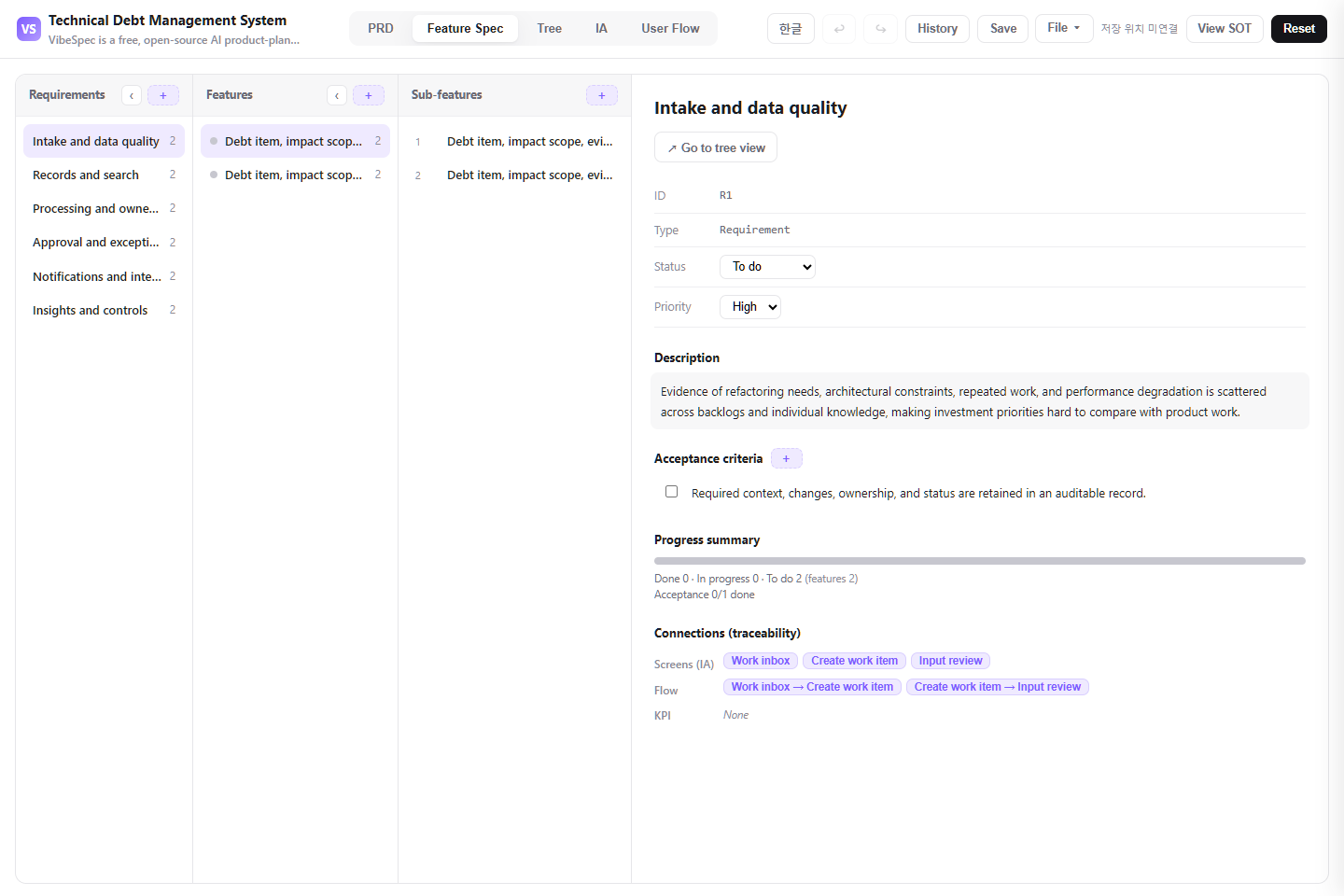
The SOT covers debt items, impact, evidence, risk, effort, and improvement proposals. Start with the affected component and the problem it creates so a reviewer can distinguish observed impact from an assumption.
Debt inventory, ownership, priority, remediation plans, and validation history form the review context. Keep a deferred item and its reason visible rather than losing it in a closed discussion.
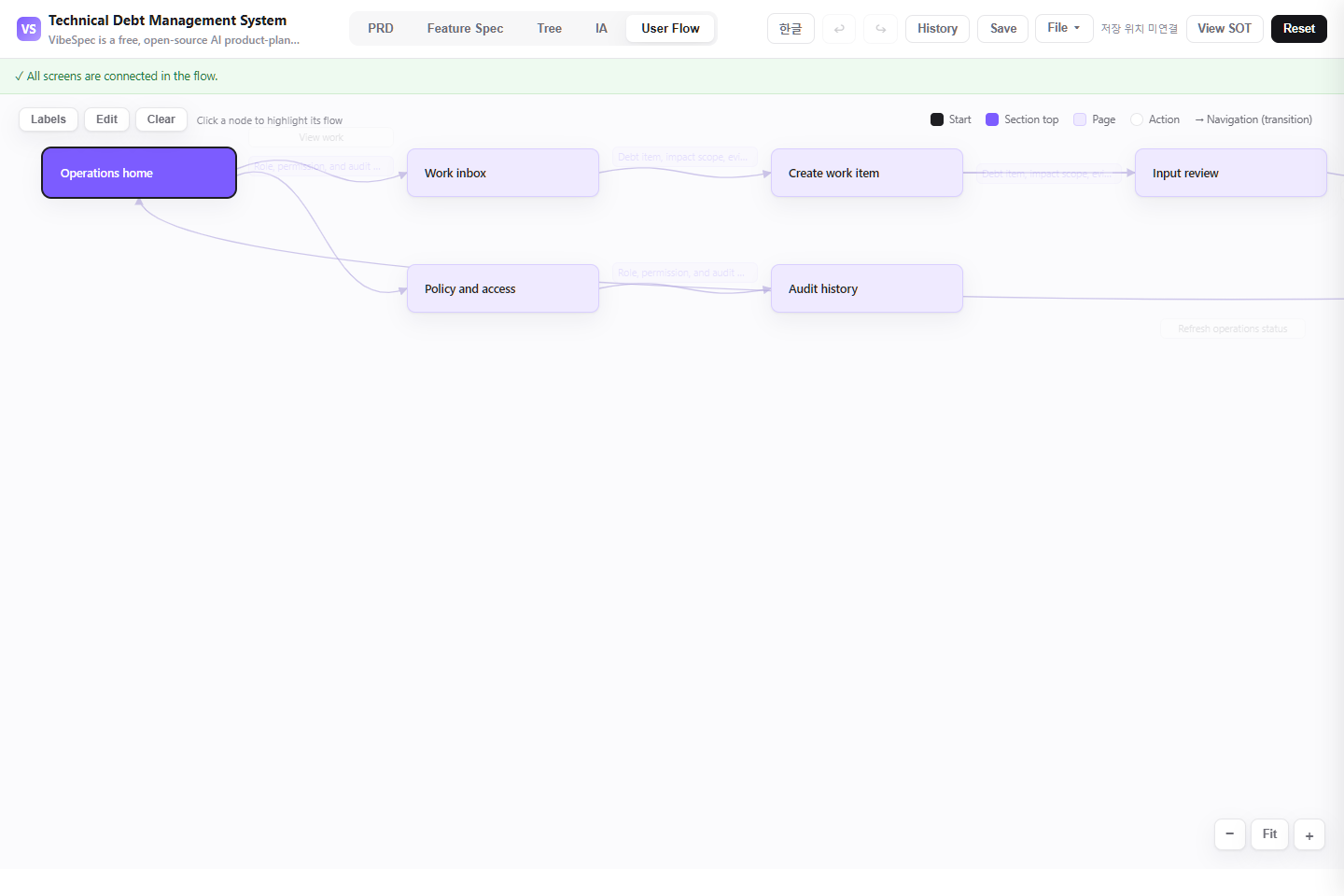
The plan includes evidence review, prioritization, investment approval, mitigation, validation, and reassessment. Agree who makes each decision and what evidence moves the item to the next state.
Resolution rate, lead time, rework, performance, and risk reduction are proposed reporting areas. The source does not provide measured outcomes: define baselines and completion rules with the engineering owner.
Use the access and history foundations to distinguish proposing a debt item from approving remediation or confirming an outcome. Record who changes priority and why.
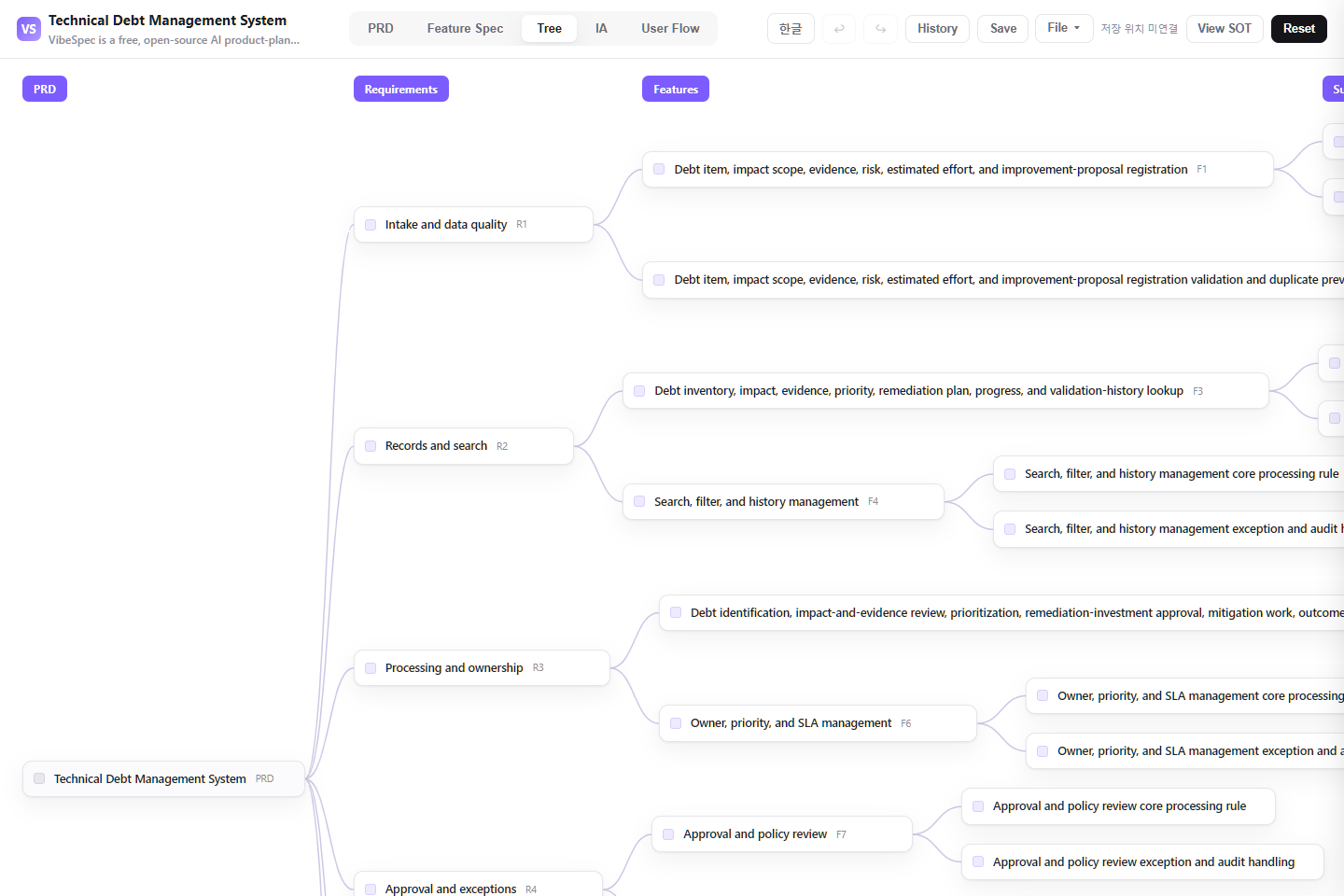
The download opens in a browser without setup. Compare the PRD, feature specification, screen structure, and user flow with the work your team does today.
Write down real user roles, required data, approval rules, exceptions, and success metrics. Start with the core flow from debt item, impact scope, evidence, risk, estimated effort, and improvement-proposal registration through debt identification, impact-and-evidence review, prioritization, remediation-investment approval, mitigation work, outcome validation, and reassessment handling.
Attach the SOT JSON in Claude or Codex with the VibeSpec plugin and describe the change in plain language. VibeSpec keeps requirements, features, screens, and user flows connected.
Choose fields for the affected component, evidence, impact, effort estimate, owner, and decision history. Label unverified impact rather than presenting every request as urgent.
Compare impact and risk with effort and dependencies. Document tie-breaking, deferral, and who approves remediation capacity; the template does not prescribe a universal score.
Agree the baseline, review period, owner, and evidence for completion. Explain how reopened items affect the resolution metric before requesting a KPI implementation.
Bring candidate evidence from static analysis, performance monitoring, incidents, rework records, and issue trackers through duplicate matching, owner confirmation, and false-positive rejection.
Connect approved remediation work to product roadmaps and team capacity, with quarterly investment limits, delivery dependencies, and deferral reasons returned to the debt decision record.
Compare pre- and post-remediation baselines for lead time, rework, incidents, performance, and operational risk, then reassess work that has no measured benefit or recurs.
Using this technical-debt SOT, draft a proposal for recurring checkout timeouts. Separate observed evidence from the suspected cause. Ask for impact, owner, effort, alternatives, and validation criteria before updating the related plan.Help compare a short-term mitigation and a larger refactor in this SOT. Keep trade-offs, dependencies, approval, and deferred work visible. Do not claim that the code has been analyzed or that either option fixes the problem.Review quarterly resolution of top-priority debt as a measurement-readiness question. Ask for the priority-freeze date, denominator, completion evidence, reopen rules, and cutoff. Keep numeric targets separate from actual outcomes.Yes. The complete HTML opens in a browser for review and sharing. To adapt the plan, attach the SOT JSON to Claude or Codex with the VibeSpec plugin and describe the change in plain language.
It includes debt item, impact scope, evidence, risk, estimated effort, and improvement-proposal registration, debt inventory, impact, evidence, priority, remediation plan, progress, and validation-history lookup, debt identification, impact-and-evidence review, prioritization, remediation-investment approval, mitigation work, outcome validation, and reassessment handling, and debt volume, priority, resolution rate, improvement lead time, rework, performance, and risk-reduction reporting, plus foundations for access, audit history, notifications, and integrations.
The HTML is a complete planning document for reading and sharing. The SOT JSON is source data that VibeSpec can update while keeping requirements, features, screens, and user flows connected.
No. KPI Measurement Check is a measurement-readiness review for whether resolution or rework KPIs have defined records and rules. It does not diagnose or guarantee broad code quality.
Neither is included. The deliverables are a connected PRD in HTML and editable SOT JSON. Use them to plan a debt register and review workflow. Spreadsheet export, repository analysis, and issue-tracker integration are separate extensions.
WORKFLOW